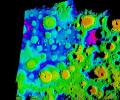
Astronomers have created a new lunar topography map with the highest resolution of the moon's rugged south polar region, which they claim provides new data on some of the Earth's natural satellite's dark craters.

The Artemis II mission has made history as its astronauts journeyed farther from Earth than any humans before, conducting a lunar flyby and observing the moon's far side in unprecedented detail.

One of the most striking features in this view is the Orientale Basin, a massive impact crater about 600 miles (965 km) wide.

NASA's Artemis II crew offers a rare look at Earth shrinking into space and the Moon coming into view during humanity's return to deep space.

The much-hyped moon show that had been expected to accompany the impact, however, turned out to be a flop, as no billowing plumes of dust and ice were visible through backyard telescopes or on NASA TV.

Scientists saw a spacecraft slamming into the moon's south pole at 9,000 kmph kicking up a 10-km-high shower of debris that NASA hopes will confirm the presence of enough water necessary to supply future visits by astronauts.


The crater was formed during the Nectarian period, which dates back to 3.85 billion years and is one of the oldest time periods in the Moon's history, the team, including researchers from the Physical Research Laboratory and Indian Space Research Organisation (ISRO), Ahmedabad, said.

Glimpses of what the historic Chandrayaan Mission discovered on the dark side of the Moon.

Using data collected by India's Chandrayan mission, NASA has detected magmatic water locked under the surface of the Moon.

The Vikram lander was 100 kilometers away from LRO, near Manzinus crater in the Moon's south pole region, when LRO transmitted laser pulses toward it on December 12 last year.

Deciphering its secrets will unlock the early history of not only our planet, but also of the star system, explains Kumar Abishek.

'You declare a date, time and place for the landing two months in advance and exactly at that moment, it touched on the moon.'

'The Lunar Reconnaissance Orbiter imaged the area of the targeted Chandrayaan-2 Vikram landing site on October 14 but did not observe any evidence of the lander'

China's National Space Administration landed the Chang'e 4 lunar probe at 10:26 am Beijing time on Thursday, in the South Pole-Aitken Basin which is an impact crater, China Central Television reported.

The Royal Observatory Greenwich has announced the shortlisted images of the 2022 Astronomy Photographer of the Year!

On October 3, Subramanian, a Chennai-based mechanical engineer, had tagged the Twitter handles of NASA, LRO and ISRO in a tweet, asking, "Is this Vikram lander? (1 km from the landing spot) Lander might have been buried in Lunar sand?"

The Rs 978 crore mission, which has been rescheduled for Monday after scientists corrected the glitch in the rocket, will be launched at 2.43 p.m from the second launchpad at Satish Dhawan Space Centre, over 100 km from Chennai.

The ISRO is aiming for a soft landing of the lander in the South Pole region of the moon where no country has gone so far.

Scientists also expressed the hope that any technical problem will be sorted out by ISRO, and the mission will be launched successfully.
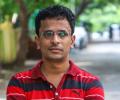
Subramanian, 33, who was on Tuesday the toast of the astronomy world, managed what ISRO and NASA couldn't through his close examination of before and after images of the scheduled landing.

If you want a reminder of just how gorgeous our universe is, then take some time to browse the winners of the 2020 Insight Investment Astronomy Photographer of the Year competition. French photographer Nicolas Lefaudeux took the top prize with a tilt-shift perspective on the Andromeda Galaxy. The winning images are part of an exhibition opening on October 23 at the National Maritime Museum in London and have been collected into a book. Cue some truly innovative an unexpected captures of galaxies, nebulae, planets, the Moon and even SpaceX satellites.
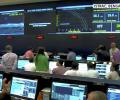
'When you look at it from the point of view of science, Chandrayaan 2 is a big success.'
